Commercial Waste in Dulwich

Commercial waste in Dulwich needs a service that is orderly, dependable and easy to align with day-to-day trading. We collect and remove a broad mix of business rubbish, helping offices, shops, hospitality venues and other premises keep on top of routine clearances without turning waste into an operational distraction. The emphasis is on practical removal, sensible sorting and a straightforward route from build-up to disposal.
Our work covers recurring commercial collections as well as one-off removals when storage areas, back rooms or staff spaces need clearing. Typical waste streams can include general office rubbish, packaging, mixed non-hazardous debris and items that are no longer useful in the workplace. If you need a clear and organised removal plan, we can discuss the most suitable approach and keep the process focused on the waste that actually needs taking away.
If you are comparing providers, start by noting what kind of waste you have, how it is stored and whether the collection needs to fit around opening hours. A short, well-prepared request makes it easier to confirm the scope and produce a quotation. Tell us what needs clearing and when it needs to be done, then we can help shape the next step.
Regular business collections and one-off clearances
Many businesses need waste removed on a repeating basis, while others only need help after an office move, refit or stock change. We can handle both styles of work, so the service can be tailored to the scale and rhythm of the premises. For some customers, that means clearing accumulated rubbish from storage rooms; for others, it means managing a larger lift-out after several weeks or months of build-up.
The main aim is to keep waste handling simple. That might involve separating common rubbish from reusable items, identifying anything that needs special attention and planning access so the collection can be completed efficiently. If you want to reduce the backlog of unwanted material, a structured collection can free up space without forcing staff to manage heavy or awkward items themselves.
Typical commercial waste types
Commercial premises can generate a varied mix of waste, and the right removal plan depends on what is present. Common examples include cardboard, packaging, office paper, broken fixtures, small items of furniture and general non-hazardous refuse. In some cases, bulkier items from stores or break areas need to be taken out alongside lighter rubbish so the whole area can be reset in one visit.
Office waste and workplace clearances
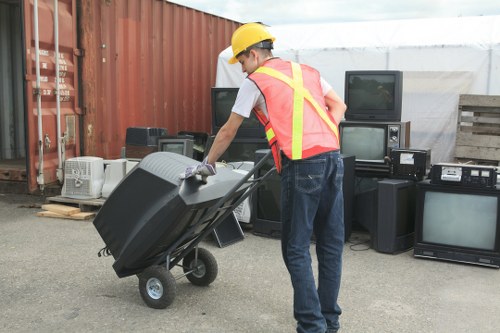
Office waste removal often involves more than simple bin emptying. Desks, filing systems, old chairs, worn screens and surplus paper can build up over time, especially in shared spaces or after rearrangements. We can remove office-related waste in a way that respects how the workplace is used, with attention to access routes, lift use and the amount of material waiting to go.
For businesses with multiple rooms or departments, it can help to treat each area separately before everything is brought together for collection. That makes it easier to distinguish between everyday rubbish, archive-style paper waste and items that should be set aside for reuse or disposal. If your office needs a cleaner, less cluttered working environment, a targeted clearance is often the most practical place to begin.
Where furniture or equipment is involved, it is useful to identify what is staying, what is being removed and whether any pieces are awkward to move safely. A good collection plan reduces confusion on the day and helps the work stay focused on the items that are actually leaving the premises.
Retail, hospitality and customer-facing premises
Shops, cafés, restaurants and other customer-facing businesses tend to generate waste in short cycles, but the type of waste can vary widely. Packaging, old display materials, broken stock containers and discarded back-of-house items can all need to be removed without interfering with trading. We can support those clearances with a practical approach that keeps the collection centered on the operational areas that matter most.
For hospitality and retail settings, it is often useful to separate front-of-house items from waste stored behind the scenes. That may include taking away old shelving components, unwanted fixtures, kitchen-adjacent debris or general back-room rubbish. If a premises is due to change layout, refresh stock handling or tidy its storage areas, commercial waste removal can provide a tidy start for the next phase of work.
The key decision is usually timing. Some collections are best arranged before opening, while others are easier once trading has finished for the day. Either way, the service should fit the premises rather than force the business to work around it. Planning around access and business hours helps keep disruption low.
Prices, quoting and what affects the cost

Commercial waste quotations are normally shaped by the volume of material, the type of waste, access to the premises and any extra handling needed to complete the job safely. A small, straightforward removal is likely to be very different from a mixed clearance involving bulky items or several loading points. Being clear about these details from the outset helps keep the quotation accurate and focused on the actual work.
The most useful information is usually simple: what needs removing, roughly how much there is, where it is located and whether there are stairs, narrow passages or loading restrictions. If several categories of waste are involved, it also helps to mention that early, because mixed collections can require more sorting and handling than a single-stream clearance. You can request a quotation once the scope is clear.
Useful details to include are the type of premises, the approximate amount of waste, whether anything is especially bulky and how access works on site. If you can also note whether the collection is a one-off or recurring requirement, that gives a better basis for pricing and scheduling. Keep it concise, but make sure it is complete enough to describe the job properly.
Recycling, reuse and responsible disposal
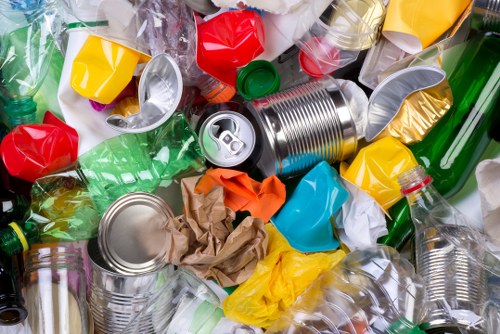
Not every item removed from a business needs the same route. Some waste can be separated for recycling, while other material may be suitable for reuse or needs standard disposal. A careful approach begins with identifying the waste categories correctly, then moving the items into the most appropriate stream. That reduces unnecessary mixing and makes the overall clearance more orderly.
Where suitable, sorting can help keep recyclable material apart from general rubbish. Cardboard, paper and certain packaging materials are often easier to manage when they are set aside early, while mixed waste and bulky items are handled separately. If your business wants a more organised waste routine, this is often the point where regular collections and better segregation start to make a visible difference.
Commercial waste work is usually most effective when the collection method matches the nature of the waste. That means choosing the right removal for the right item, rather than trying to treat everything as one generic pile. Clear separation also helps if the premises regularly generate the same kinds of waste each week or month.
About Dulwich
Dulwich is an area in south London with a character shaped by its village-like centres, long-established institutions and strong architectural identity. It is associated with a number of distinct districts, including Dulwich Village, East Dulwich and West Dulwich, each with its own streetscape and local atmosphere. The area’s history is closely linked to the establishment of Alleyn’s College of God’s Gift, founded in the early 17th century by Edward Alleyn, whose endowment later helped shape local education and landholding. Much of Dulwich retains a relatively low-rise appearance compared with the denser parts of inner London, and conservation policies have played a role in preserving that feel. Dulwich Park, one of the best-known open spaces in the area, offers broad paths, water, tree cover and open lawns, while nearby Belair Park adds another green space with historic landscape interest. The Dulwich Picture Gallery, established in 1817, is notable as the first purpose-built public art gallery in England and remains a major cultural landmark. The area also contains a mix of Georgian, Victorian and later residential architecture, alongside local schools, churches and community facilities that contribute to its layered identity. Rail stations at West Dulwich, North Dulwich and East Dulwich connect different parts of the district to the wider city, while local streets and smaller shopping parades reinforce its neighbourhood character. The combination of historic buildings, parks and active community life gives Dulwich a distinct place within south London.
Bulky items and mixed non-hazardous waste
Some commercial waste jobs are dominated by large, awkward items rather than loose rubbish. Old counters, shelving, chairs, damaged display units and surplus storage pieces all need handling with care so they can be removed without causing unnecessary damage or disruption. We can deal with that kind of bulky waste as part of a wider clearance or as a standalone task, depending on what the premises requires.
Mixed waste is another common scenario. A back room may contain packaging, broken fittings, empty boxes, office clutter and redundant equipment all at once. The important step is to organise the collection so that each item is assessed correctly and handled in the right way. That is especially useful when the waste is not neatly stacked or when the business has limited storage space before the visit.
When bulky items and smaller waste are combined, it is sensible to consider sequence as well as volume. Items that block access may need to come out first, while lighter waste can then be cleared more easily. This is one of the reasons a short, accurate description of the load matters before the collection is arranged.
Business premises with storage rooms, stock and back-of-house areas
Storage areas often become the place where surplus items gather over time. That can include damaged goods, redundant fittings, empty packaging, archive material and miscellaneous items that no longer have a clear home. We can help clear these areas so they are easier to use again, whether the aim is to restore order, prepare for a fit-out or simply make the room functional.
Back-of-house clearances are usually most successful when the business has already separated anything it intends to keep. After that, the remaining waste can be grouped in a way that makes the removal more efficient. This may sound simple, but it often saves time on site and helps avoid uncertainty when there are several different types of waste waiting to go.
If a premises regularly builds up stock-related waste, it may help to think in terms of repeat collections rather than one-off interventions. That gives the business a steadier way to manage surplus material and keeps clutter from becoming embedded in the working environment.
How to prepare for a commercial waste quotation
A strong quotation request does not need to be long, but it should be specific enough to describe the waste accurately. The best starting point is to note what needs removing, whether it is stacked or spread out and how the collection point is accessed. If there are several rooms involved, mention that as well so the scope is clear from the outset.
The second useful step is to think about practical details that affect removal. For example, stairs, narrow corridors, restricted parking or limited loading space may change how the work is carried out. If you know whether the clearance needs to happen before opening hours or after closing, include that too. Clear information leads to a clearer quotation, and it also helps the collection run more smoothly once booked.
When you are ready, send the basic details and ask for a quotation. If the waste is varied or the site is complex, adding a few extra notes can prevent back-and-forth and make the response more useful. A good enquiry should tell the story of the job simply, without overcomplicating it.
Office moves, refurbishments and periodic waste planning
Commercial waste removal is especially useful when a workplace is changing. Office moves, refurbishments and periodic decluttering all produce waste that does not fit neatly into everyday bin use. In those situations, the collection needs to support the changeover rather than slow it down. We can work with the material that is ready to leave so the site can move on to the next stage more cleanly.
For businesses that generate regular waste, it may be worth thinking beyond a single visit and into a recurring pattern. That does not have to be complicated. It may simply mean having a reliable way to clear the same kinds of rubbish at predictable intervals. Consistency is often the most valuable part of waste management because it prevents small build-ups becoming larger problems.
Whether the job is part of a move, a reorganisation or a scheduled tidy-up, the aim is the same: remove what is no longer needed and leave the premises easier to use. If you would like to discuss the right approach, we are ready to help. For the final step, please request a quotation today.